Public listings checked 25/10/2026. Dates use each event’s local time. Check organiser details before travelling.
Explore the region
Explore Darwin, Palmerston and selected rural communities. Kakadu and Litchfield are separate national-park trips; access and conditions can change seasonally.
Listings across Darwin, Darwin City.
Attractions and places to visit
91 places in this selection. Opening hours, access and admission vary; check the place details.
The Sue Wah Chin Building, also known as Stone Houses, was built in 1888 by Kwong Sue Duk (also known as Sun Mow Loong) and featured hipped roofs. It is a single storey building divided into five commercial premises. Each shopfront has an identical pattern of openings with a central door and a window each side. The tenancy at the far left of the building was fortified to protect the opium held there at Kwong Sue Duk's distribution centre. The building is one of only a handful of nineteenth century buildings of any sort that survive in the Darwin city centre and represents a time in the development of the Northern Territory that saw the establishment and expansion of the Chinese population as a significant component of the Darwin community. It has close associations with the well-known Chin family, who owned the building from 1921 until 2008. As for others, this building survived cyclones in 1897, 1937 and 1974 as well as bombing raids during World War II. Following Cyclone Tracy, the badly damaged hipped roofs were replaced with a flat roof. Folklore says the building was in five discrete parts to accommodate Kwong's wives. That was never the case.
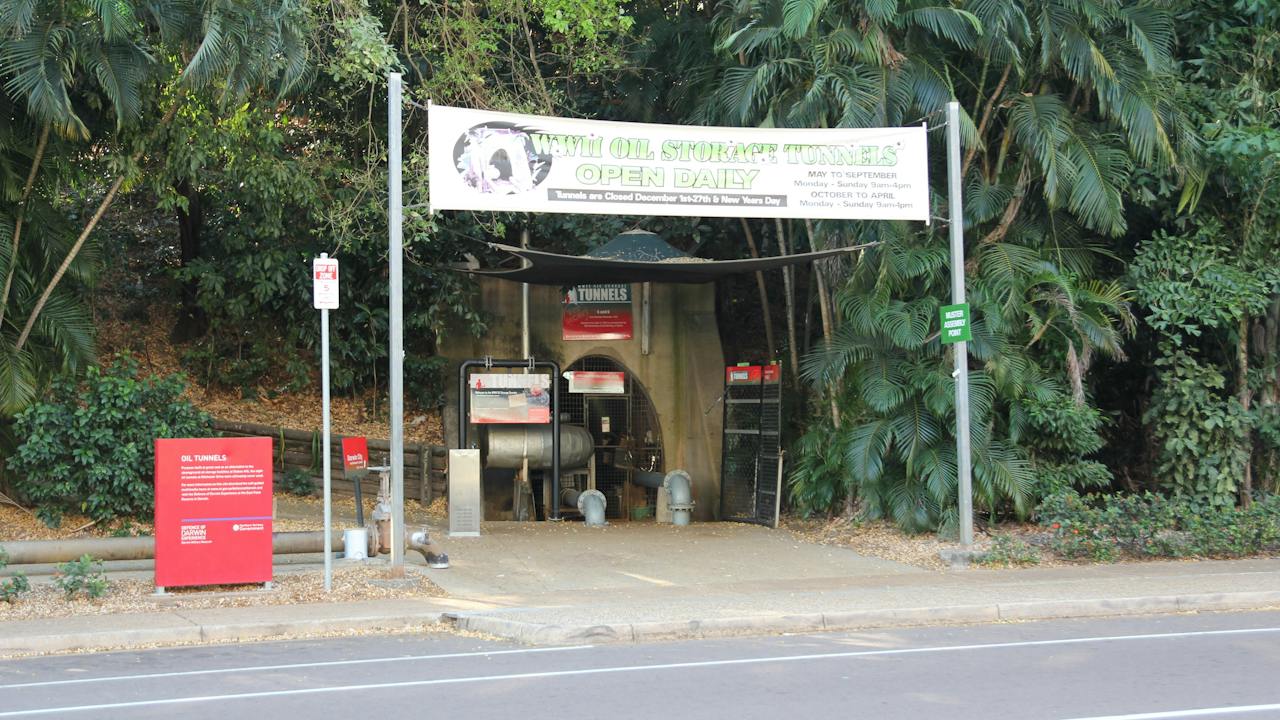
During World War II vulnerability of standard fuel storage tanks to aerial bombing stimulated the innovative approach of underground fuel storage in concrete and steel lined tunnels. Construction of the tunnels was part of an overall defence strategy for Australia and the Pacific region.
In 1943 contractors Johns and Waygood commenced building the storage tunnels, finishing number 11 in 1946 after war's end. Difficulties and delays in construction, material deficiencies and the inability to effectively seal the tunnels from infiltration of water meant that the tunnels were never used for their intended purpose.
Despite this they are evocative of the desperate years when the Japanese were pressing their attack on mainland Australia and the Top End, in particular as the 'sharp end' of our defence effort. The tunnels are redolent of the immense difficulties of maintaining defensive operations so far from supporting industrial infrastructure in unfamiliar conditions. They are unique in Australia and are a symbol of the dogged determination and willingness to try against the odds that characterises the defenders of Australia.
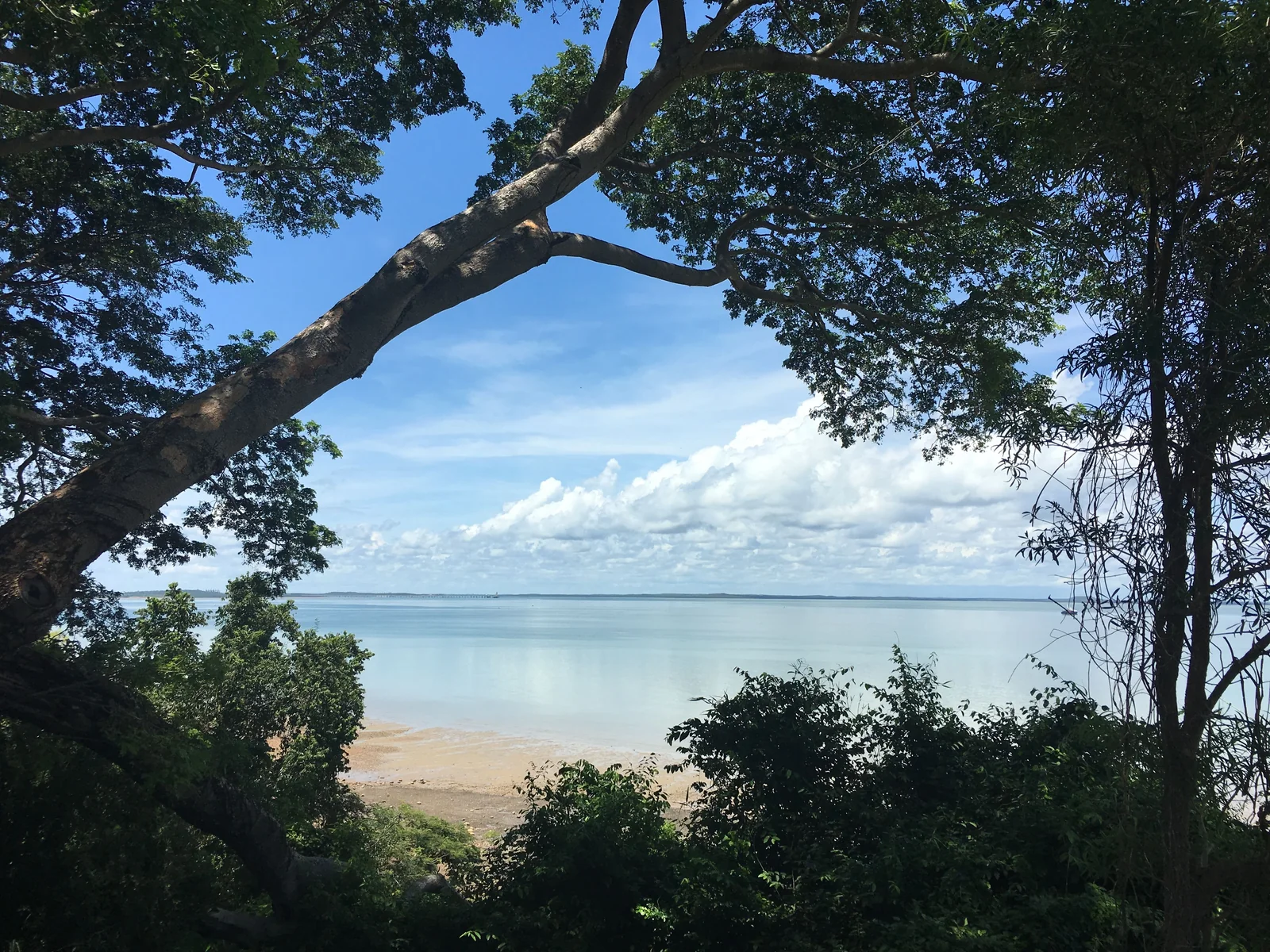
Survivor's Lookout, located near the Esplanade, provides sweeping views over the sparkling blue Darwin Harbour and commemorates those brave Darwin citizens who survived the Bombing of Darwin in 1942.
Interpretive signage at the lookout tells the stories of resilience and survival following the first and largest attack on Australian soil during World War II.
Established in 2006, Nurture Beauty Boutique has been at the forefront in looking after the ladies and gents of Darwin and a lot of tourists. Situated in close to Darwin city's Post Office it's an easy walk from hotels in the area.
A boutique salon with a relaxing ambient feel, specialising in Facials Advance skin care treatments, Body Sculpting and cosmetic tattoos.
Cosmetic Tattoo or PMU including Ombre/Powder brows, Microblading, Feather brows and 3D brows, are fast becoming a popular trend, these brows are a semi permanent option for improving the appearance of your eyebrows. Helen begun her training in Melbourne and then took advanced classes with world renowned PMU artist's. Want to learn more? go to the website and down load the free E-Book and book your appointments online.
Helen Wilkinson is a fully qualified Beauty therapist with 39 years experience in the industry.
Prior to the Stuart Highway upgrade during World War II, visitors usually arrived in Darwin by ship. From at least as early as the 1880's, passengers disembarked at the Port of Darwin and climbed the escarpment via the walkway to town known colloquially as Chinaman's or Traveller's Walk. The path began at the railway yards with steps up to Cavenagh Street and finished at the Terminus Hotel.
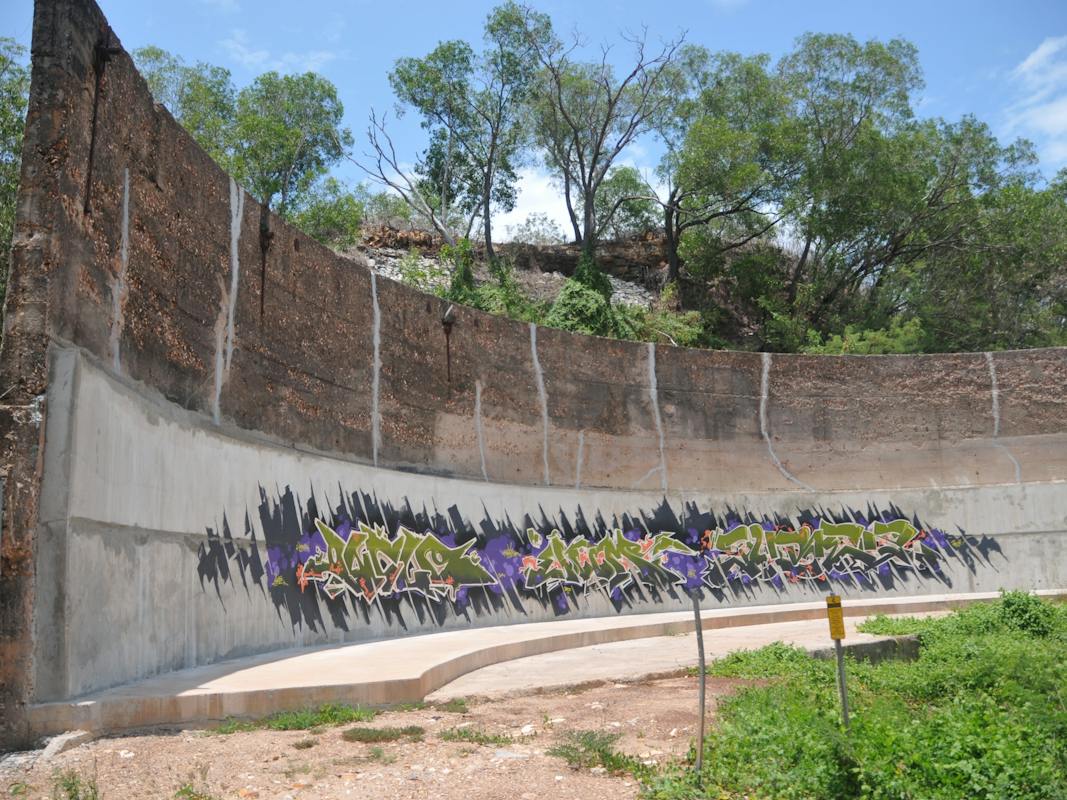
The remnant WWII No. 6 Oil Tank is a semi-circular concrete shell located at the base of Stokes Hill. Built in 1942 after the initial Japanese aerial attacks on Darwin, this concrete splinter-proof wall was designed to protect the internal steel oil tank from shrapnel damage. This concrete tank formed part of the protection measures of the Oil Fuel Installation which also included air raid shelters, bunds and concrete splinter-proof walls around oil pipes, much of which has since been removed. In close proximity to the Steam Pump House, this remnant wall evokes wartime associations and is a highly significant element as a component of the original Oil Fuel Installation configuration.
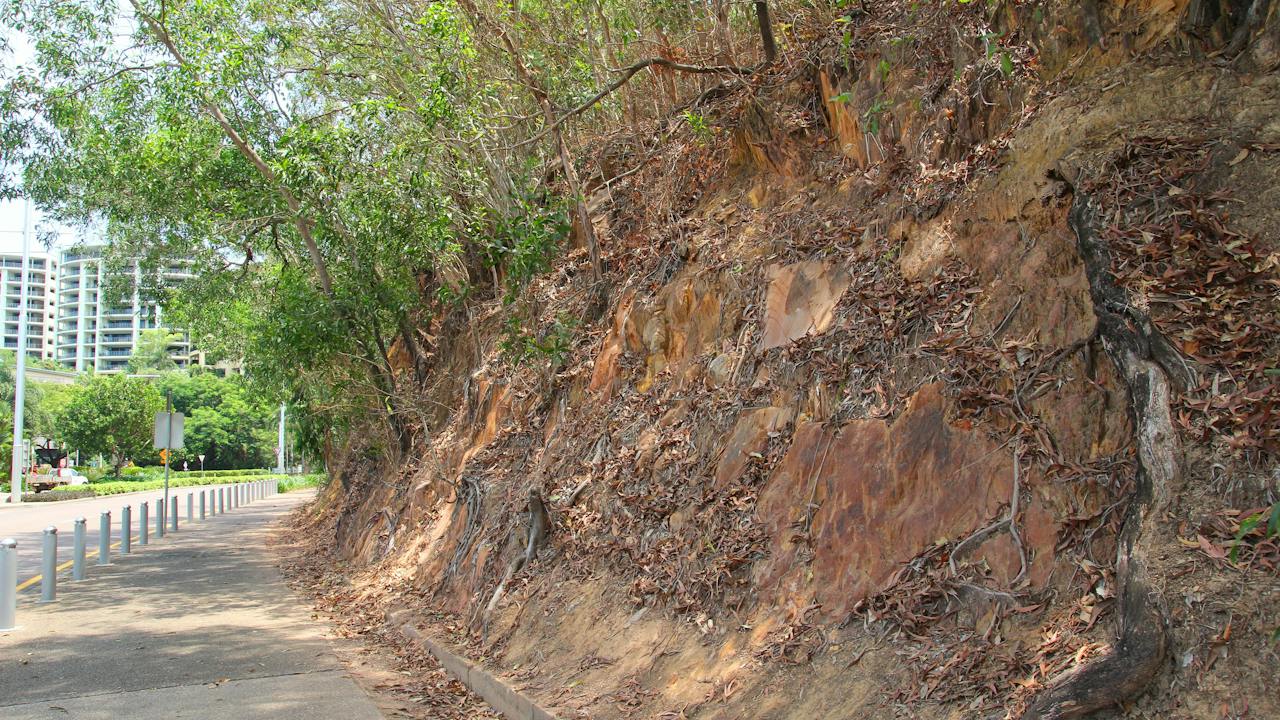
Hughes Avenue, incorporating the lime kiln walk, is historically significant as one of the first roadways established in Darwin. From 1869, Hughes Avenue served as the main pedestrian and transport corridors between Goyder's Camp and the port below, and the town of Palmerston with newly established government buildings on the escarpment on the plateau above.
The Hughes Avenue alignment was used to transport goods from the jetty area to the growing city above until completion of Stokes Hill Wharf in 1887. The current alignment of Hughes Avenue is virtually identical to that established by Goyder and his party. Beginning opposite the Courthouse and Police Station (Administrator's Offices) at the end of Smith Street, the descent along Hughes Avenue provides views of Government House on the hill above and vistas of the port and harbour below. These provide an insight into the daily activity experienced by Goyder and the first Europeans who landed in Port Darwin in February 1869.
Liberty Square is a landscaped park located between Parliament House and the Supreme Court.
Liberty Square features the heritage listed State Square Banyan Tree. Artwork by Larrakia/Mayalli artist Keelan Fejo is embedded in a seating area on elevated decking surrounding the tree, which is culturally significant for local Larrakia people.
At more than 200 years old this banyan is a remnant of the original monsoon vine forest. It has survived cyclones, bombs and extensive development. In 1994, the tree was permanently protected under the Heritage Act 2011 for its significance in Darwin's history.
'Liberty Square' was named by Darwin Town Council in 1919 and commemorates the Darwin Rebellion of 17 December 1918. Hundreds of workers marched to this site, protesting the government's actions, resulting in a Royal Commission into the administration of the Northern Territory.
The Cable Station, responsible for maintaining the sub-sea communications cable which stretched from Indonesia to Darwin where it joined the Overland Telegraph Line, was built here in the 1870s. It was extensively damaged by bombing during WWII. A commemorative monument built from original cable station stone is located next to Parliament House.
Liberty Square also features an astronomical observation pillar by Pietro Baracchi who, with others, established the true longitude of Port Darwin in 1883 in the grounds of the Port Darwin Post Office (Parliament House).
The Banyan Tree in State Square is valued by the community as a remnant of the original Darwin foreshore vegetation. It is over 200 years old and was the congregation point for the Larakia youths prior to ceremonies which took place under the nearby Tamarind tree.
The large mature banyan tree is growing near the Supreme Court building within State Square. The tree is in a large open grassed area and is surrounded by a low garden bed. The tree is of significance and provides a shady place to sit in the city.
The CWA/Red Cross shop demonstrates one area of the activities of the Country Women's Association; an important and influential women's organisation during the post war period of community re-establishment of Darwin. The site is a ground level rendered brick and concrete structure built as an office and club rooms. The building has been heavily adapted over the years. None of the original windows or doors remain with the exception of two windows of glass blocks.
Stokes Hill was named after the commander of HMS Beagle John Lort Stokes, who visited and named Darwin after his friend Charles Darwin in 1839.
Larrakia were the first people to live in this area and know 'Stokes Hill' to have within it a Larrakia spiritual ancestor. This ancestor is known as "Chinute Chinute' and manifest itself from time to time as the Tawny Frog-mouthed Owl.
Library & Archives NT (LANT) is the Northern Territory's premier public research library and archival organisation. It collects, preserves and shares the documentary heritage of the Northern Territory and is a trusted steward of Territory memory and history.
LANT collections include NT Government archives, books, newspapers, photographs, maps, magazines, ephemera, websites, letters, diaries, community and organisational records, and oral histories.
LANT's Darwin city venue is open to visitors and provides a relaxed environment in which to peruse the print and digital collections. On permanent display is the exhibition 'Meeting Ground: Territory Encounters' uncovering the Territory's unique history and diverse cultures that have made it what it is today. LANT Darwin city also showcases its collection through a range of temporary exhibitions, talks, tours and events.