Public listings checked 25/10/2026. Dates use each event’s local time. Check organiser details before travelling.
Explore the region
Explore Darwin, Palmerston and selected rural communities. Kakadu and Litchfield are separate national-park trips; access and conditions can change seasonally.
Listings across Darwin, Darwin City.
Attractions and places to visit
91 places in this selection. Opening hours, access and admission vary; check the place details.
Elevated Boutique offers an excellent choice of gorgeous, cool, fashion, beautiful accessories, eclectic jewellery and quality gifts. The delight in Australian design and natural fabrics suited to the Tropics.
Situated in the heart of one of Darwin's most popular shopping areas, Parap, Elevated is easily accessible with free parking, and within walking distance of Cafes, Art Galleries, Darwin's favourite Delicatessen and other unique retailers.
Allow plenty of time for a full perusal of this unique shopping experience. The atmosphere is tranquil, welcoming and relaxing. The service is warm and friendly. Welcome to Elevated.
The QANTAS Hangar was built in 1934 and has survived both the Bombing of Darwin during WWII and Cyclone Tracy.
In late 1997, the Northern Territory Government purchased the hangar from Air Services Australia (formerly DCA). It then became the home of the NT Museum's workshop and a repository for a number of their large mechanical artifacts.
The Motor Vehicle Enthusiasts Club was formed in 1985 and incorporated in 1986. In January 1999, the Motor Vehicle Enthusiasts Club signed a lease with the Department of Arts and Museums and began restoring the hangar to a usable state. The Motor Vehicle Enthusiasts Club now uses the QANTAS Hangar as its headquarters and workshop. Members have converted the main hangar into a display area where the club and some members' vehicles are showcased.
On permanent display within the hangar are: The 1910 steam traction engine "Margaret Rose", 1918 AEC truck, 1927 Thornycroft truck, 1989 B Model Mack truck, Dennis fire engines and the 1885 steam engine "Sandfly".
Numerous vehicles owned by members, and one of the largest collections of stationary engines in Australia, known as the Izod Collection.
Visitors are welcome to come in for a chat and a wander around the hangar. No entrance fee is required, but donations to help the club cover hangar running expenses are appreciated.
The hangar is a pre-fabricated building developed by the Sidney-Williams Company and erected in Darwin in 1934 for Qantas Empire Airways Ltd in time for the Centenary Air race. It was used by the first Australia-England air service operated by Qantas and Empire Airways and later by the first Adelaide–Darwin air service operated by Qantas and Guinea Airways. By 1946 the Ross Smith airstrip ceased to be operational and the hangar was used as a mechanical workshop and later a store.
Sandfly is historically significant to the Northern Territory as the first and longest serving locomotive to operate on the North Australia Railway (NAR).
Sandfly operated on the NAR between 1887 and 1950 and was instrumental in its construction. The NAR became a vital infrastructure link which directly facilitated the expansion of the mining and pastoral industries in the NT and the defence of northern Australia during WWII. Sandfly was the only locomotive of its class to operate along the NAR and is one of three remaining steam locomotives associated with the NAR left in the NT.
Following her retirement, Sandfly was relocated to SA in 1959 for restoration and display. In 2005, she was returned to the NT as a gift to commemorate completion of the Alice Springs to Darwin Railway. Sandfly is a symbol of the early pioneering and frontier Territory spirit that built the NAR. She is also a political reflection about the century of political manoeuvring required to complete the transcontinental railway from north to south and fulfil the 1911 contract between the Commonwealth, SA and the NT.
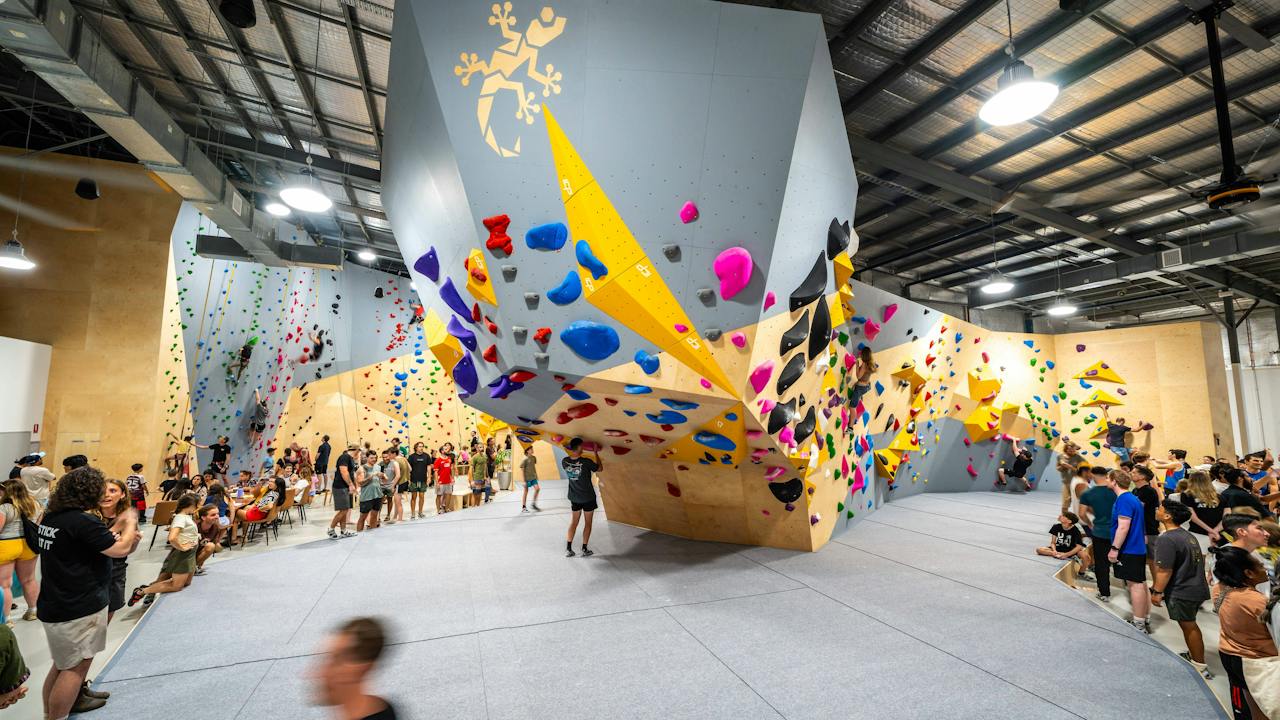
Gecko Climb is bouldering, climbing, a cafe, gym, a place to play, be and belong.
Gecko Climb is Darwin's newest hub for climbing, community, and good coffee.
Gecko Climb has bouldering, top-rope, autobelay climbing, plus a training area with Kilter board, spray wall, and strength training equipment— all under one roof.
Off the wall, you'll find a laid-back café and chillout space, a function room perfect for movie nights and events, and Physiotherapy services provided by Top End Health Project! Whether you're here to send, sweat, or just soak up the vibe, Gecko Climb is your new go-to.
The Sidney Williams Hut and Annexe at Pee Wee Camp, along with several concrete floor slabs, are all that remains of a large camp developed on the site during WWII. Built to accommodate construction workers employed by the Public Works Department and later by the Allied Works Council working on the gun turrets for the large 9.2” guns at East Point.
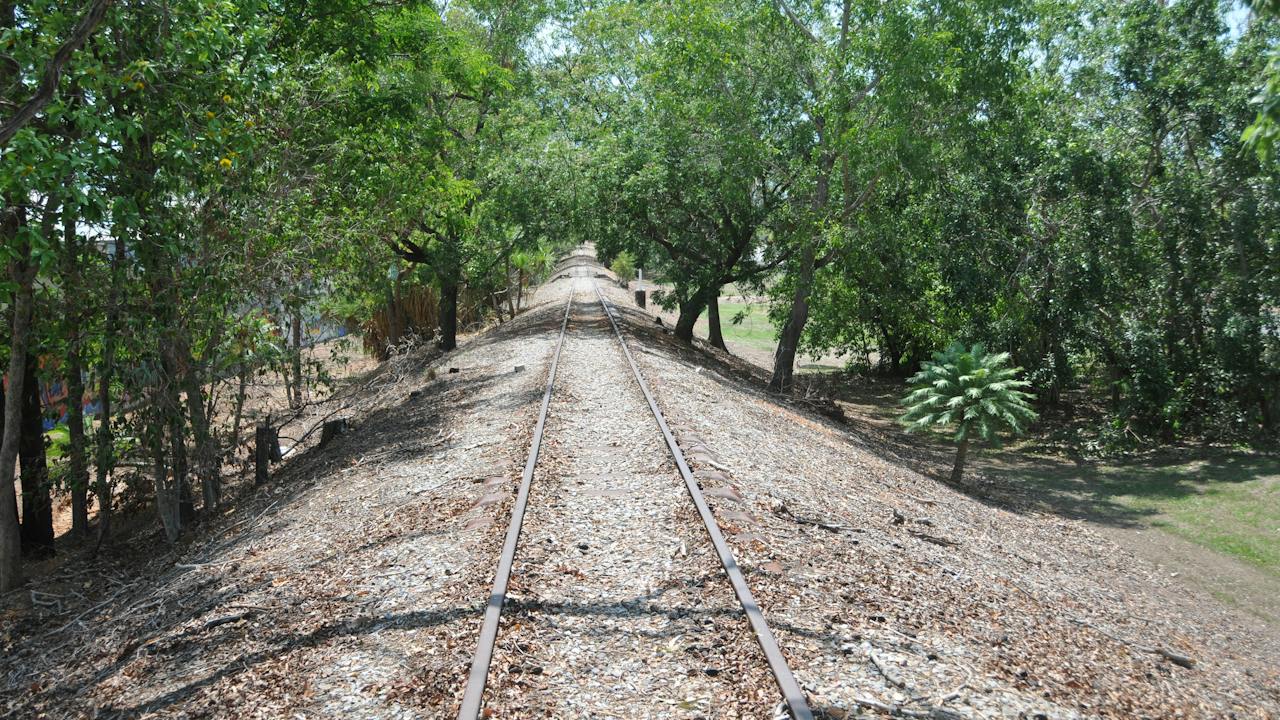
This remnant of the North Australia Railway (NAR) is an important reminder of the earlier rail system and is an invaluable site for interpretation and display.
The NAR was the start of a grand vision to build a transcontinental railway from north to south. Reaching Pine Creek in 1888, it was extended to Katherine in 1926. The railway was progressing south through Birdum in 1929 when construction was halted because of the Great Depression.
The NAR was a major factor in opening the Top End and key infrastructure for the exploitation of minerals discovered during and after the construction of the Overland Telegraph Line. The railway provided a vital link with Darwin for people in remote communities. During WWII the railway was a vital link for troop and material movements to the war zone.
The Narrows site comprises remnants of the NAR corridor, consisting of a steel bridge, railway line and embankment, steel sleepers, signal posts and warning device switches. It runs alongside the Stuart Highway and is fragmented in patches but is in good condition.
Fannie Bay Gaol operated as Her Majesty’s Gaol and Labour Prison from 1883 until 1979. The original buildings comprised two blocks with 16 cells, a washhouse and a kitchen. A stone infirmary was constructed in 1887 and remains on site. In 1920 cells were constructed for women prisoners. The female prison block included a small garden designed to keep the prisoners busy. During WWII, prisoners were released and the gaol used by the Army and Air Force. A watch tower "native section" for Aboriginal prisoners, kitchen mess building, remand section and two maximum security wings were added during the 1950s. The gaol contains rare gallows constructed for the last two hangings in the Northern Territory in 1952.
The integrity and severity of the precinct combine to convey the oppressive atmosphere of the institution. The gaol is highly valued for its penal, legal, medical and social history. Fannie Bay Gaol was Darwin's main prison for almost 100 years until 1979, when prisoners were relocated to the correctional facility located in Berrimah.
Now an important historic site, Fannie Bay Gaol attracts thousands of visitors each year.
Situated on Darwin's Frances Bay, Charles Darwin National Park protects one of Australia's most significant wetlands, important woodlands and local indigenous and WWII histories.
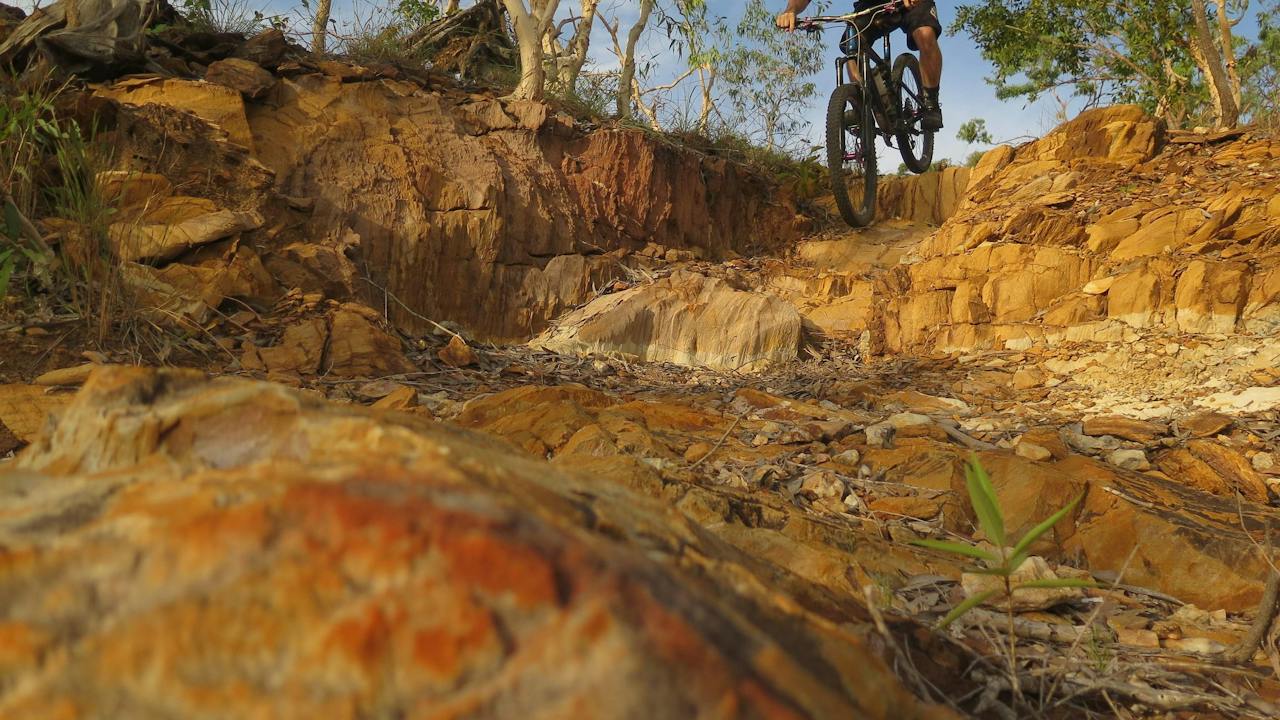
Explore the park's extensive network of walking and mountain biking tracks. Enjoy a barbecue in the shady picnic area and then make your way to the lookout platform for great views of Darwin Harbour and its wetlands.
During World War II, this area was part of a network of military sites that formed Australia's front line of defence. Today you can see historic ammunition storage bunkers and testing areas that were built in 1944 and used until the mid-1980s. Explore a fascinating display of memorabilia from World War II and learn about Darwin's role in the Pacific War during your visit to one of these bunkers.
The Park area also has a long indigenous history. Shell middens in the area indicate that Aboriginal people have lived in the area for thousands of years. Port Darwin wetland is a large and diverse ecological system, with 36 of the Northern Territory's 51 mangrove species protected in its system of inlets, islands and bays.
Experience the thrill of horse racing at the Darwin Turf Club - nestled in the lush, tropical surrounds of Fannie Bay - and is home of the iconic Darwin Cup Carnival, hosting member dining options, functions and corporate events.
Since the turn of the Century the Darwin Cup has become the biggest sporting event in the Northern Territory with over 20,000 people attending every year. As one of only a few dirt tracks in operation on the provincial circuit, the picturesque racecourse in Fannie Bay is the venue which sees several illustrious racing names vie for over 1.95 million dollars in prize money and trophies over the month long event.
Standing alongside visitors will be thousands of locals who will proudly showcase the Territory with their unique style and world famous hospitality, that can only be experienced in the Top End.
With spectacular views over the racecourse, our indoor and outdoor spaces are an exciting mix of elegance and grace. Offering the versatility to cater for an intimate gathering of ten right through to expansive social occasions or ambitious business events of 1000 or more, you'll enjoy the perfect environment to celebrate in style.
East Point Reserve is Darwin's largest park area. It's popular with locals and visitors for its safe year-round saltwater swimming at Lake Alexander, military history, and the uninterrupted views of Darwin and Fannie Bay and sunsets from Dudley Point. There's an extensive network of walking and cycling paths, landscaped picnic areas with free barbecue facilities and playgrounds for the kids.
East Point played a significant role in the protection of Australia during World War II. Visit the Darwin Military Museum to see footage of the WWII bombings of Darwin, its photographic and information displays, and explore the gun turret precinct.
East Point Reserve is home to abundant wildlife, so go for a stroll to look for wallabies, bandicoots, brushtail possums and numerous species of reptiles, butterflies and birds. Take the 30-minute loop walk from the car park near the lake through monsoonal vine forest into the mangroves. Follow the boardwalk into the tidal region - look out for many species of fish, crustaceans and molluscs.
East Point Reserve includes several popular beaches, including Darwin's most popular family beach at Fannie Bay. Lake Alexander draws its seawater from the bay, for safe and 'stinger-free' swimming throughout the year.
Step into the heart of Australia's wartime history at the Darwin Military Museum and Defence of Darwin Experience, where powerful stories and immersive displays bring the events of World War II to life.
Located within the historic East Point Military Precinct, this remarkable site places you right where Australia's northern defences once stood - surrounded by original gun emplacements, military artefacts and sweeping coastal views that once guarded Darwin Harbour.
Inside the Defence of Darwin Experience, explore the Bombing of Darwin Gallery, watch gripping multimedia presentations and hear first-hand accounts from those who lived through the attacks. Then, wander the museum grounds to discover thousands of artefacts - from artillery pieces and vehicles to uniforms, models and artworks - each revealing a unique part of Australia's story at war.
After your visit, relax in the air-conditioned café, browse the museum shop for local and historical gifts, and enjoy the natural beauty of East Point Reserve.
The Darwin Military Museum has deep roots of its own. Established by the Royal Australian Artillery Association (NT) in 1969, following efforts to preserve the site's original wartime structures and artefacts. What began as a small local initiative has grown into one of the Top End's most significant heritage attractions, continuing to honour the people and places that shaped Australia's northern defence.